Sandston sits in one of the most challenging environments in Virginia for outdoor structures. Heavy clay soil holds moisture against footings year-round, summer humidity pushes past 80 percent for months at a time, and the freeze-thaw cycles that move through central Virginia each winter put constant pressure on every fastener, board, and connection point. Decks built and maintained without respect for these conditions fail far short of their expected lifespan.
This guide walks through essential deck maintenance practices for Sandston homeowners, why Virginia clay soil and humidity demand specific attention, and which professional services help wood and composite decks survive central Virginia conditions for decades rather than just years.
Understanding How Virginia Conditions Affect Decks
Virginia clay soil expands when wet, contracts when dry, and cycles through this movement constantly across every season of the year. This expansion and contraction puts pressure on deck footings, often causing posts to shift, tilt, or heave over time. Sandston builds anchored on traditional concrete footings or diamond piers handle this soil movement far better than shallow or undersized foundations.
Humidity creates a different problem above the soil. The constant moisture in Virginia air soaks into wood decking, creating ideal conditions for rot, mold, and fungal growth. Composite, mineral-based, and PVC decking resist these conditions far better than wood, but every deck benefits from proactive deck maintenance that addresses moisture, fasteners, and surface protection before small issues become structural problems.
Annual Inspection and Early Problem Detection
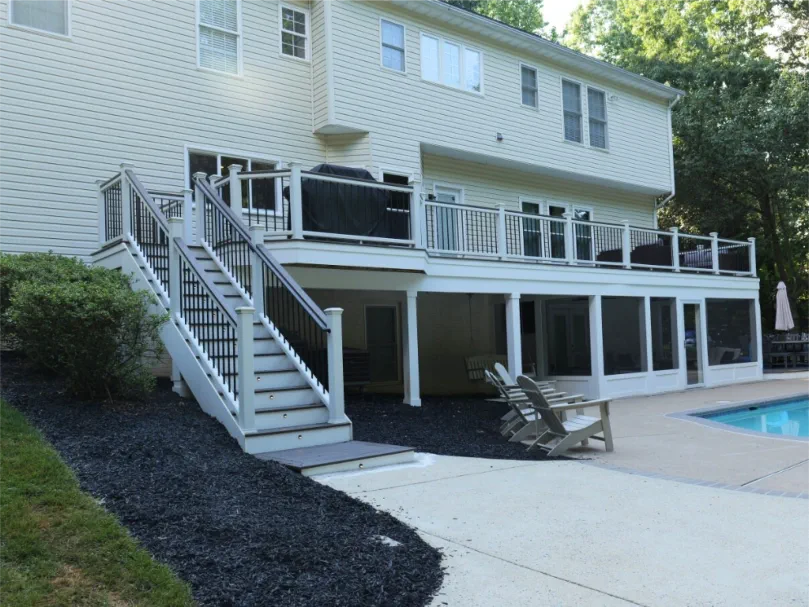
The single most important deck maintenance practice is annual inspection. Walking the deck at least once per year, ideally in spring after winter has done its damage, catches small problems while they are still cheap to fix. Look for loose fasteners, cupped or split boards, soft spots underfoot, leaning posts, rusty hangers, and any gap between the deck and the home that signals ledger problems developing.
Professional deck inspection takes the process further by checking the components homeowners cannot easily see. The underside of the deck, the joist hangers, the lateral load connectors, and the ledger flashing all sit hidden from casual view but reveal critical structural information. Quality deck maintenance includes regular professional assessment that identifies issues before they become safety hazards or expensive repair projects across the structure.
Sealing and Staining Wood Decks
Wood decks need sealing or staining every two to three years in the Sandston climate. The combination of UV exposure and humidity strips natural oils from wood surfaces over time, leaving the boards vulnerable to moisture penetration that leads to splitting, warping, and rot. Sealing creates a moisture barrier that slows this damage, while staining adds both protection and color refresh in a single application.
Pressure-treated wood, cedar, yellow pine, C-select pine, and redwood all benefit from regular sealing and staining as part of routine deck maintenance. The right product depends on the wood species, the desired color, and the level of UV protection needed for the specific deck orientation. Skipping these steps shortens the deck’s lifespan dramatically, often cutting it in half compared to decks maintained on a proper schedule.
Refinishing and Restoration for Aging Decks
Some Sandston decks reach a point where simple sealing and staining no longer restore the surface. Years of weather exposure, fading, and surface damage call for refinishing or full restoration to bring the deck back to like-new condition. Refinishing typically involves stripping the old finish, addressing any board-level damage, and applying fresh stain or sealer to restore both appearance and protection.
Restoration goes deeper, addressing structural issues alongside surface refinishing. This service repairs loose connections, replaces individual damaged boards, refreshes fasteners, and restores the deck to safe, functional condition without the cost of full replacement. Quality deck maintenance providers handle the full spectrum from sealing through complete restoration, matching the service to the actual condition of the deck rather than pushing the most expensive option.
When Maintenance Crosses Into Repair
Some issues fall outside routine deck maintenance and require dedicated repair work. Deck resurfacing replaces the surface boards while preserving the original framing, which works well when the structural elements remain sound but the decking surface has reached the end of its life. Deck additions expand existing structures, and deck remodeling reconfigures layout or upgrades materials on aging decks.
A qualified contractor evaluates the deck during inspection and recommends the right path based on actual condition rather than pushing services that do not match the situation. Resurfacing makes sense when more than 30 percent of boards show significant deterioration, while full remodeling fits homeowners who want to expand or upgrade beyond what restoration delivers. For expert deck maintenance, inspection, sealing, staining, refinishing, restoration, and repair services in Sandston and across the surrounding Virginia communities, contact HD Decks and Exteriors at (703) 565-2329 to schedule a consultation and protect your investment for the long haul.